
Why Is My Pain Worse at Night?
Pain Management in Sherman Oaks: Understanding Why Pain May Feel Worse at Night
Pain that becomes more noticeable at night can make it difficult to fall asleep, remain asleep, or find a comfortable position. In some cases, symptoms may remain manageable throughout the day but become more intense once you lie down or attempt to rest.
So, why is your pain worse at night? There is no single explanation. Your sleeping position, daily activity, reduced movement, increased awareness of symptoms, and the relationship between pain and sleep may all contribute. Additionally, certain injuries and medical conditions can produce symptoms that become more noticeable at night.
At PainX in Sherman Oaks, we begin with a personalized consultation to better understand your symptoms, medical history, and how nighttime pain is affecting your daily life.
Why Does Pain Feel Worse at Night?
Nighttime pain can occur for several reasons. However, the specific cause depends on where the pain occurs, how it feels, and whether other symptoms are present.
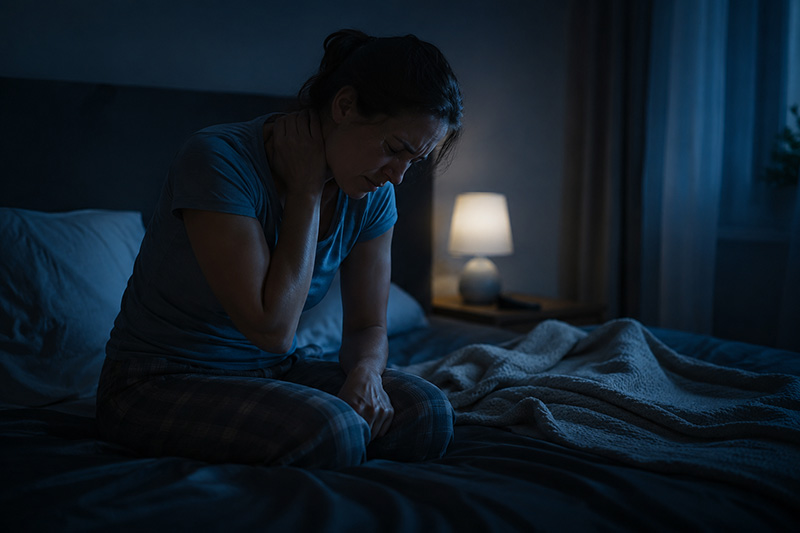
Possible Contributing Factors
Factors may include:
- Sleeping in a position that places pressure on a sensitive area
- Remaining in one position for an extended period
- Stiffness caused by reduced movement
- Irritation following physical activity during the day
- Increased awareness of pain when there are fewer distractions
- Difficulty relaxing because of stress or tension
- An injury or medical condition that affects comfort at night
- Poor sleep increasing sensitivity to pain
Can Your Sleeping Position Make Pain Worse?
Your sleeping position can affect how pressure is distributed across your muscles, joints, and spine. Consequently, a position that feels comfortable initially may begin causing discomfort after you remain still for an extended period.
For example, sleeping directly on a painful shoulder or hip may place additional pressure on that area. Meanwhile, the position of the neck or lower back may contribute to discomfort if the body is not adequately supported.
However, the most appropriate sleeping position depends on the location and possible cause of the pain. While adjusting your position or using supportive pillows may improve comfort temporarily, persistent symptoms may require a medical evaluation.
Does Reduced Movement Contribute to Nighttime Pain?
During the day, people regularly change positions as they walk, sit, stand, and complete everyday activities. At night, however, the body may remain relatively still for a much longer period.
For some individuals, this reduced movement may contribute to stiffness or make an uncomfortable area feel more noticeable. Turning over in bed may then temporarily increase the discomfort.
On the other hand, daytime activity can also influence nighttime symptoms. Repetitive movements, prolonged sitting, exercise, or physically demanding work may irritate an area during the day, with the effects becoming more apparent once the body is at rest.
Are You Simply More Aware of Pain at Night?
During the day, work, conversations, errands, and other responsibilities compete for your attention. Once the environment becomes quiet, there may be fewer distractions from physical discomfort.
This does not mean the pain is imaginary. Instead, pain is a complex personal experience influenced by physical, neurological, and psychological factors. Therefore, a symptom that received less attention during a busy day may become much more noticeable when you are trying to sleep.
Keeping track of when symptoms begin and what you did during the day may help identify useful patterns.
What Is the Relationship Between Pain and Sleep?
Pain and sleep can affect one another. Pain may make it difficult to fall asleep or cause repeated awakenings. In turn, insufficient or disrupted sleep may increase sensitivity to pain and make symptoms more difficult to manage.
Over time, this can create a frustrating cycle:
- Pain interferes with sleep.
- Poor sleep increases fatigue and pain sensitivity.
- Increased sensitivity makes it harder to rest the following night.
- Repeated sleep disruption begins affecting daytime activities.
Research has found a two-way relationship between chronic pain and sleep difficulties. Therefore, it is important to tell your doctor not only where you hurt, but also how frequently the symptoms interrupt your sleep. NIH research
When Should Nighttime Pain Be Evaluated?
Occasional discomfort after an active day or an awkward sleeping position may improve with time. Nevertheless, pain that repeatedly disrupts sleep or continues without improvement may deserve further evaluation.
Consider scheduling a consultation if:
Pain regularly wakes you during the night.
You have difficulty finding any comfortable sleeping position
Symptoms are becoming more frequent or intense
Pain continues despite changing positions
The discomfort persists during the day
You experience numbness, tingling, burning, or weakness
Your mobility or everyday activities are becoming limited
The symptoms began after an injury
Most importantly, you do not need to wait until nighttime pain becomes unbearable. If it is repeatedly interfering with your ability to rest, discussing it with a doctor may help clarify the appropriate next steps.
Frequently Asked Questions
Is pain that gets worse at night always serious?
No. Nighttime pain can have many possible explanations, including sleeping position, pressure on a sensitive area, stiffness, or activity performed during the day. However, persistent, unexplained, or worsening pain should be medically evaluated.
Why does my back pain get worse when I lie down?
Lying down changes the position of the spine and may place pressure on different muscles, joints, or nerves. Because back pain can have several possible causes, an examination may be needed if the discomfort persists, worsens at night, or is accompanied by other symptoms.
Can poor sleep make chronic pain worse?
Yes. Pain can disrupt sleep, while poor sleep may increase pain sensitivity. This two-way relationship can make both symptoms more difficult to manage over time.
Should I change my medication before going to bed?
Do not change the timing or dosage of prescription or over-the-counter medication without speaking with an appropriate healthcare professional. Medication recommendations depend on your health history, current prescriptions, and individual medical circumstances.
What kind of doctor should I see for nighttime pain?
The appropriate provider depends on the symptoms and their possible cause. A pain management doctor can evaluate persistent pain, review previous care, and determine whether testing, referral, or additional treatment may be appropriate.
Schedule a Pain Management Consultation in Sherman Oaks
If pain is repeatedly keeping you awake or making it difficult to find a comfortable sleeping position, consider beginning with a conversation.
PainX provides personalized pain management consultations in Sherman Oaks for patients from Encino, Studio City, Van Nuys, North Hollywood, and surrounding communities.
Schedule a consultation with PainX to discuss what you have been experiencing and learn more about the options that may be appropriate for you.
This content is intended for general educational purposes and should not replace personalized medical advice. Seek immediate medical attention for severe, sudden, or potentially life-threatening symptoms.